My mission
I have always had a passion to live as environmentally sustainable as possible without being a full-on tree hugger. So, buying a thermally efficient house in Staffordshire on 24 September 2014, with a high-level of insulation and underfloor heating heralded the start of my journey.
I wanted to see if it was possible to live as close to off-grid as possible, while still being connected to the grid to maintain a continuous electrical supply. A must, to run a conventional gadget friendly lifestyle with the dishwasher, TV, and soundbar, washer, tumble dryer and Wi-Fi throughout the house.
And, this is a review of my experiences and how I achieved it, stage by stage.
The renewable energy power source
The solar panels (15 x LG 250W black mono) a 3.74kW array were installed on Friday 27 February 2015 at 12.15pm. And, began generating via the connected dual string Samil Solar River 3.2kW inverter. I registered the system for Feed-In Tariff (FIT) payments at the beginning of March.
This particular type of inverter better suited the solar project, as it would allow for shading from trees and clouds to only affect one of the two strings.

My house with the installed solar array.
The house is southeast, facing and affected by the shadows created by the surrounding trees, and the front protruding roof. This was why I went the dual string route, without the additional cost of micro inverters.
My wife would not allow for a conventional installation of roof mounted panels. So, instead I found a company who could install them in the roof, and at a reduced cost as they were trialling this system.
I soon became aware of the need to monitor generation and trying to maximise our usage, and achieved this by investing in the OWL Intuition system. This also gave me options to expand its capabilities as the need arises, like monitoring hot water, etc.
It felt great to run household appliances for free by seeing when we had available, spare electricity, above our background standard usage.
We spent the first year using an 800W kettle that took ages to boil. But, this meant we could still boil a kettle for free or at a lower cost during lower solar generation periods. Any excess power would go to the grid, or be used by the washing machine or tumble dryer.
The following year, I needed increased power generation, as just after lunch the sun was to the side of the house, then diagonal to the rear roof before it went down behind the trees.
I tried to find out how much more capacity I could add to my registered system only to discover in April 2016, adding more solar capacity was disallowed. So, I would not benefit from any form of subsidy!

I was gutted, but after a bit of internet trawling found a lot of solar installation companies were selling off stock, about to stop installations almost overnight.
Hey presto, I had further solar panels installed to the rear of my house, increasing my generating capacity by 2kW. And, in the nick of time, just before they stopped installing. Despite being told I was wasting my money because of the surrounding trees and the northwest facing roof.
So, by April 2016, I had a very cheap system installed, and what a difference this made to how long we could produce electricity for. Although our output was not huge, it was steady for a longer period before rapidly dropping to zero.
It was almost impossible to get more than about 40% of usage, even being careful. I needed to find something to further maximise energy generation and storage. That’s when I found out about Solar Iboost.
This can divert excess generation back to other devices, such as a hot-water cylinder. But, the problem I had was having a combi to supply our house with hot water in the cold, uninsulated garage.
So, time to insulate the garage loft and put up a ceiling to reduce the heat loss from the roof, and conserve heat from the combi pipework, running through the cold garage to the house.
Next, I found a used Solar Iboost which I set up in the garage to an extension lead to charge cordless devices and it worked well.
Then I hit the jackpot! On eBay and I found a used thermal store (the same one I had seen online) that had an indirect coil. It could be used to preheat the water going into my combi, which could accept water at up to 60C.

The thermal store, hot-water cylinder. 1
So, after a phone call to the seller about the tank's condition, I bought it for £75 and went to collect it. Hmm – bigger than I thought! But, it just went into the car and came with a thermostatic mixing valve that would limit the water outlet temperature to 55C.
It was time to get it set up and tested before spending any money on having a plumber install it; it could leak or just not work.
My fears were unfounded –all good, and both Solar Iboost and the thermal store working, and limiting the water outlet temperature, as it should, just hard work getting my plumber to agree to fit it. But, what a good job he did.
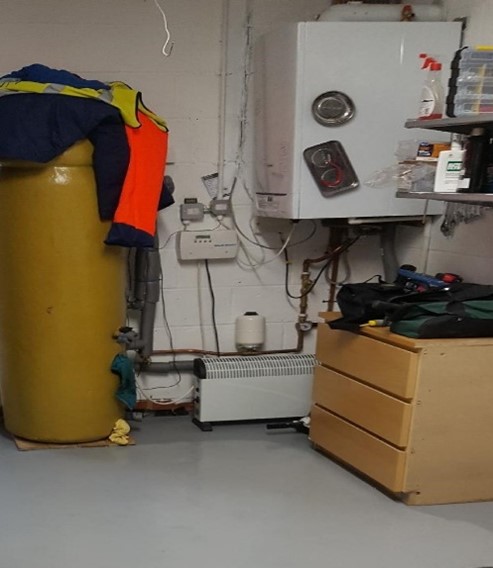
A neat expansion to my project.
So, from April 2016, we could meet all of our hot water needs from diverted excess generation, diverted to this thermal store, and monitor the tank temperature via the OWL Intuition, with just the addition of a tank sensor and sender.
Useful performance information provided by Owl Intuition and the sensors is below:

Now we are seeing no gas usage until towards the end of September, when central heating is firing up to keep the house up-to-temperature, and occasionally add a little heat to the hot water if it’s not hot enough.
Just a note regarding the potential risks of legionella: the way the thermal store operates eliminates all such risks. The stored water is specially treated to prevent bacterial growth. And, is totally separate from the water (which is fed to the combi) that only remains in the thermal store for a short duration, and if it is not 55C the combi will heat the water until it is!
So, generation has increased from around 3200kWh in the first year to 4200kWh in the following year, after installing the additional rear system. And, although the peak has not increased, generation periods are longer!
I realised that we still needed to add additional methods of making use of what we are generating. And so looked into adding a battery system to further our self-sufficiency, but after attending various shows I wondered if it would ever be worthwhile.
Even so, October 2017, I decided on a system which was independent of both solar systems and ordered a Sofar Solar inverter and 4.8kW in the form of two Pylontech 2.4kWh batteries. And, had the system installed to see what it could do for us.
According to technical information, it could store 4.8kW, but the batteries can only discharge at 2.5kW per hour and only go down to 15% before they shut down. The system then enters sleep mode until I have excess generation that can start being stored back into the batteries.
What I was unaware of is just how much additional benefit there was, even during the day while the panels were generating, as if a power-hungry device, say a 2.5kW kettle, was switched on. And, while only generating 1kW, then the 1.5kW would come from the batteries. So, even in the day, they could still assist.
Moving into April 2018, after realising I could still charge the batteries and heat the thermal store, I was still producing more than I could at times use. So, as the battery system was modular, I decided to buy an additional battery. Hopefully to store enough electricity to run from the sun going down until it rose, and the panels started generating the next day.
So, now at 7.2kW battery storage capacity, I was able to charge at a higher rate, 3kW, and discharge at the same rate. Even in April, we could run our appliances for 24 hours without the batteries running out of charge, result!
However, you cannot always stay totally off-grid for electricity, as on occasions (we have an induction hob and electric oven) and use more than we are producing via the solar panels and battery output. So, this extra power has to come from the grid.
But, 12 July 2018 we are on day 72 of not exhausting the batteries (not all in a row, and from 1 April 2019) I will be able to supply further data as required regarding performance. And, from the first of January 2018 until today, 68% of our electricity consumption has been from solar generation and I can still provide all of our hot water needs from the thermal store.

Our electricity consumption for April was 113kWh vs 198.4kWh last year, and for May, just 22.8kWh vs 176kWh last year. And, for June this year, just 8kWh vs 166.9kWh and this July to date we’ve used just 2kWh.
We have a background consumption of 150W at its lowest, and around 400W at the highest. The items constantly running are a large fridge freezer, CCTV system, and a septic tank with an air pump.
Our house’s power consumption varies between 8kWh on a best day to 28kWh on a high power consumption day. Still, I am hoping to get our grid import below 2000kWh annually from April this year to April next year. This would be a further reduction of 1000kWh with all the batteries installed and still produce our hot water.
Two years ago, I also changed to a kettle that can be set to switch off at 90C, which saves electricity! We only boil water for babies' bottles, drinks are fine at 90C. Quite a lot of additional energy is required to boil water compared to just heating it to 90C.
Oakwood Energy Efficiency Project Improvements 2021 update
As my neighbour’s gas combi boiler, identical to mine, and of the same age, failed, it seemed an opportune moment to upgrade. So, in October 2020, after having a few quotes to install an air source heat pump (ASHP), I applied for a Green Homes Grant. A tedious process, but after a lot of paperwork and questions progressing into July 2021, I received my grant for my chosen installer, Piped Up Ltd (Midlands).
These items were fitted at the same time as the ASHP as an additional job for me by the installers.
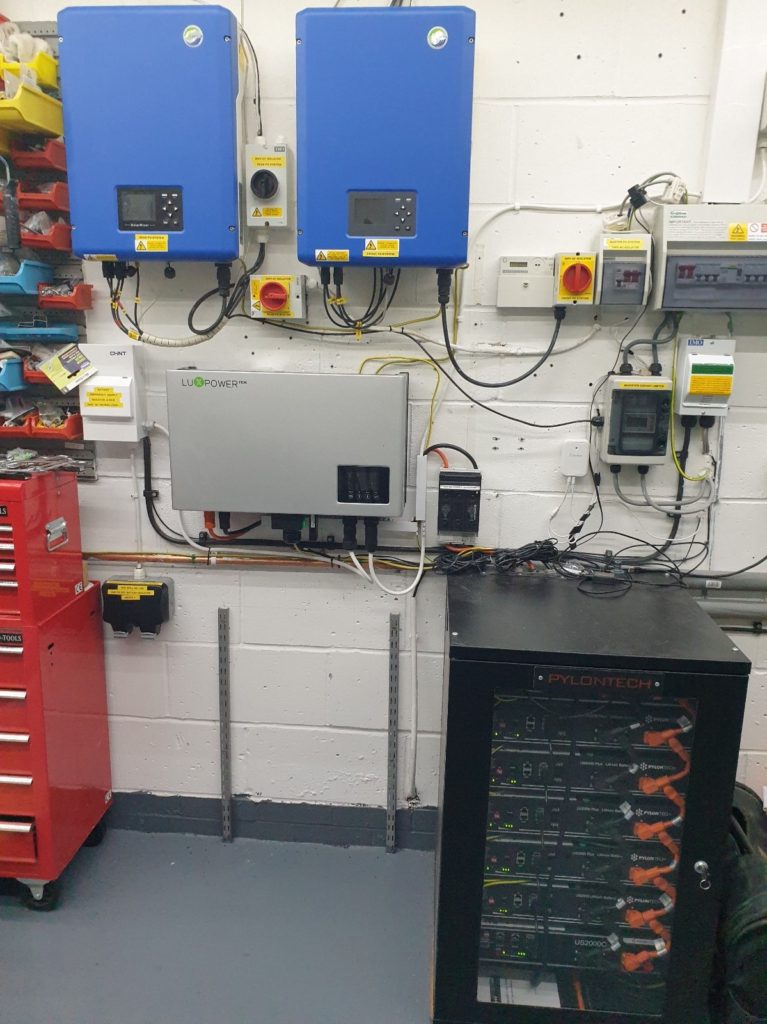
So, I had the Vaillant Arotherm Plus 7kW ASHP with 200l buffer and 200l hot water tank with the ASHP being located under my carport.
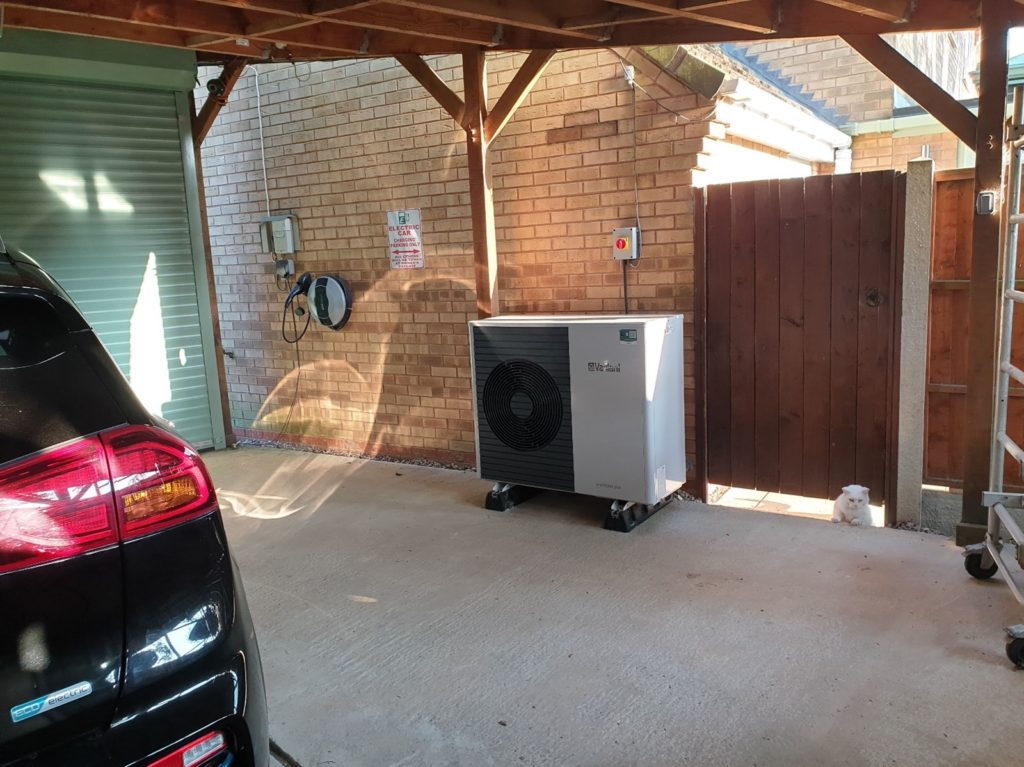
The tanks and pipework were installed in my garage, where the thermal store and combi were located, in just over three days in mid-July.
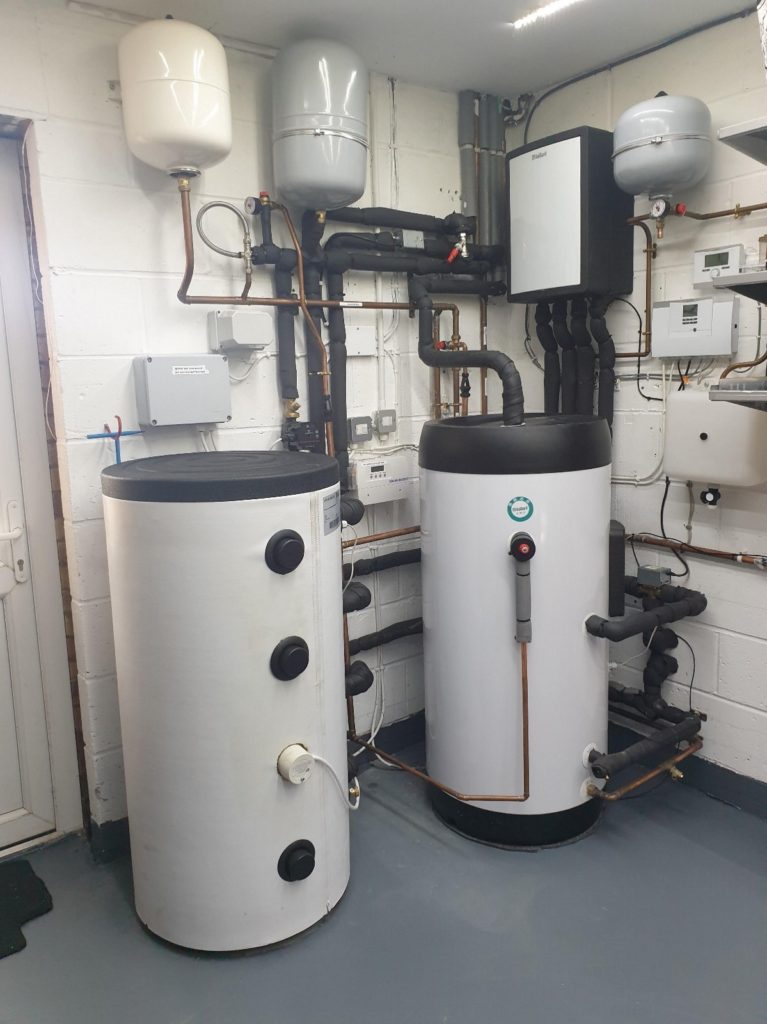
For those wondering about my old equipment, I sold the thermal store and inverter to fellow energy-conscious enthusiasts to make use of, and enjoy. It’s great the Sofar battery inverter continues working, helping others to use less power, and be more self-sufficient. All of this equipment reduced the cost of increasing my battery storage capacity and increased charge and discharge rate.
As for my energy tariff, I have now moved from Octopus Go to Octopus Go faster for five hours cheaper electricity (starting at 01.30am until 06.30am) allowing the ASHP to run at 5.5p per kWh, and still charge my EV and house batteries.
Gas supply
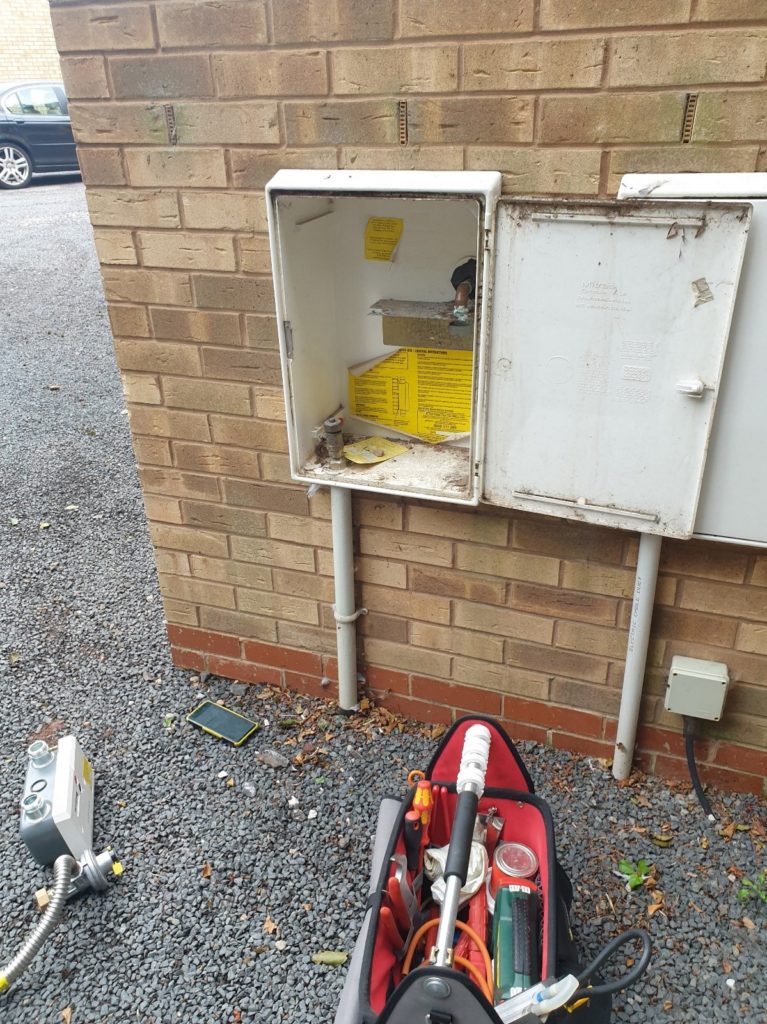
Gas was disconnected, and the meter removed on 16 August, as the combi was the last of my gas consuming appliances, as there was little point in continuing to pay the standing charge for gas.
A great deal of thought has been spent in choosing when to have the ASHP start each day, I have done this by setting the underfloor heating (UFH) zone thermostats to call for heat at 22C at 02.30am (1 hour after the ASHP). This will allow me to monitor the time taken for the house to warm up from the night setting of 18C and adjust as I need to.
So, at 06.30am, the UFH is set back to 20C to coincide with the completion of my off-peak Go Faster tariff and at 16.30pm. And, I have UFH set to 19C, to assist in monitoring heat loss and at 21.30pm I have set the night-time of 18C again to help control when the ASHP runs.
Currently, these settings are working well, but as we are yet to stay much below 10C for any length of time, it is early days.
I then set the hot water to 50C from 05.30am to reduce the load on the ASHP as it heats the UFH via the buffer tank and the weekly legionella run is set on Sunday at the same 05.30am time.
Looking at my small amount of data, these settings are working, and I have the same settings for the upstairs bedrooms. But, at lower temperatures as we dislike warm bedrooms, so the most we have them set to come on is 20.5C at 02.30am with a night setting of just 18C at 11.00pm, although they have yet to get this low.
I have replaced standard thermostatic radiator valves with a set of cheap smart radiator valves to set and view the room temperatures remotely. And, to cover the landing/bathroom and en-suite, I have a digital room stat, with the same settings as the bedrooms and it’s all keeping constant temperatures.
As the ASHP is set on a heat curve, it should maintain room temperatures (using the outdoor sensor) as the outside cools as we approach winter
Data
I have not got enough data yet to tabulate any detailed figures on running costs as the heating has only been activated on 28 September during colder weather when temperatures dropped to a single figure, Celsius.
But, for September this year I used less electricity than last year, and this year includes the ASHP, supplying all our hot water, which was a separate payment for gas last year and another standing charge.
With the larger inverter, I’m able to capture and use a much larger percentage of my solar generation, too. And I’m in a better position, not using as much daytime full-priced (peak rate) electricity. Although, in the depths of winter, I know it won’t be possible to run everything off just solar and off-peak.
My Kia Eniro4 has now covered 6768 miles and only spent around £100 to charge the car batteries, with a lot coming from solar PV and the rest from off-peak. I have only used public chargers five times.
November 3rd 2021, have had 3 days now of 2-3’c overnight & the house has stayed at our chosen room temperatures of 21’c in the lounge, 20’c in the kitchen/ hallway/ utility &front room & as of yet we are still running the house consumption on a mix of solar & imported Octopus Go Faster 5 hours timeslot from 01.30am to 06.30am, this is normally the lowest carbon grid generated production time.
I do have my own Personal website with regular updates of data & graphs that can be visited www.oakwoodalan.co.uk where you can leave a message & if you wish to join Octopus for your clean energy supplier please use my link that will give you £50 credit & will also give me a credit of the same which will help support the running of my website.
https://share.octopus.energy/mint-lion-117
Alan Chapman, Nov 2021